

What to Look for in a Commercial Faucet for Industrial Use
In industrial and high-use commercial environments, a faucet is not just a basic component. It plays a critical role in daily operations, sanitation, and long-term maintenance costs. The right choice comes down to measurable performance, proven durability, and compliance with strict standards. Chicago Faucets has built its reputation by delivering on all three. With more than a century of engineering behind it and the introduction of the first replaceable cartridge, the company helped define what a durable, serviceable plumbing fitting should be. See the complete line of high performance commercial faucets here.
Chicago Faucets Delivers Durability, Performance & Serviceability
Material and construction
One of the first things to evaluate is how the faucet is built.
 What matters
- Corrosion resistance in harsh environments
- Structural strength under constant use
- Long-term durability without material failure
What you will find with Chicago Faucets
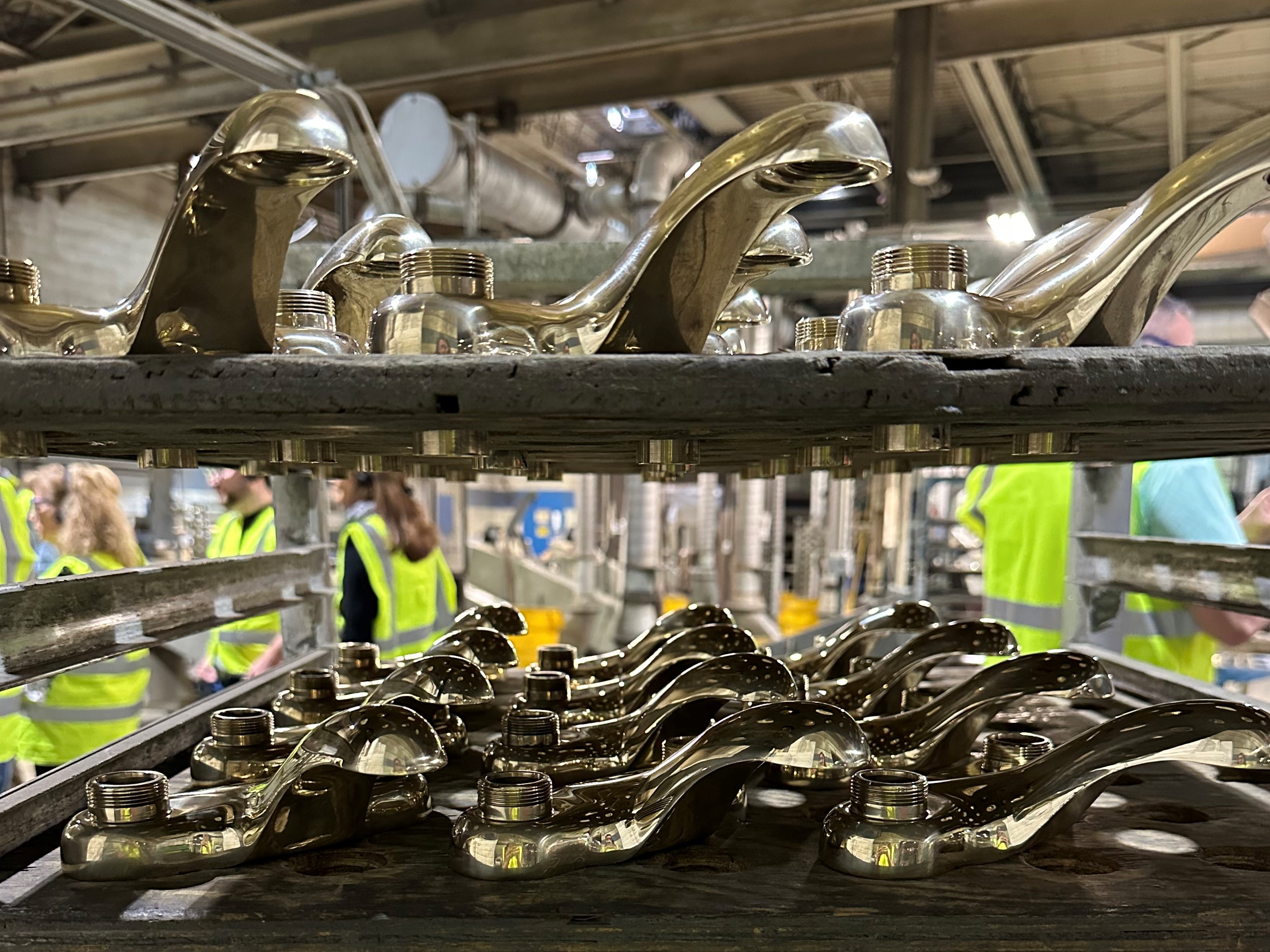
Chicago Faucets uses solid cast brass construction in many styles of faucets, not thin stamped metal. Their ECAST design keeps lead content at or below 0.25 percent while maintaining strength and durability.
Brass bodies provide a thicker, more impact-resistant structure compared to many stainless steel units. In facilities where stainless is specified, most equipment falls in the 16 to 18 gauge range, roughly 0.050 to 0.062 inches thick. Chicago Faucets’ cast construction meets or exceeds the durability expectations of that range while offering better resistance to wear over time.
Flow rate and real-world performance
Flow rate is not one-size-fits-all. Different applications require different output levels.
 What matters
- Enough flow for cleaning and service tasks
- Low-flow options to meet conservation requirements
- Consistent performance across varying demand
Chicago Faucets range
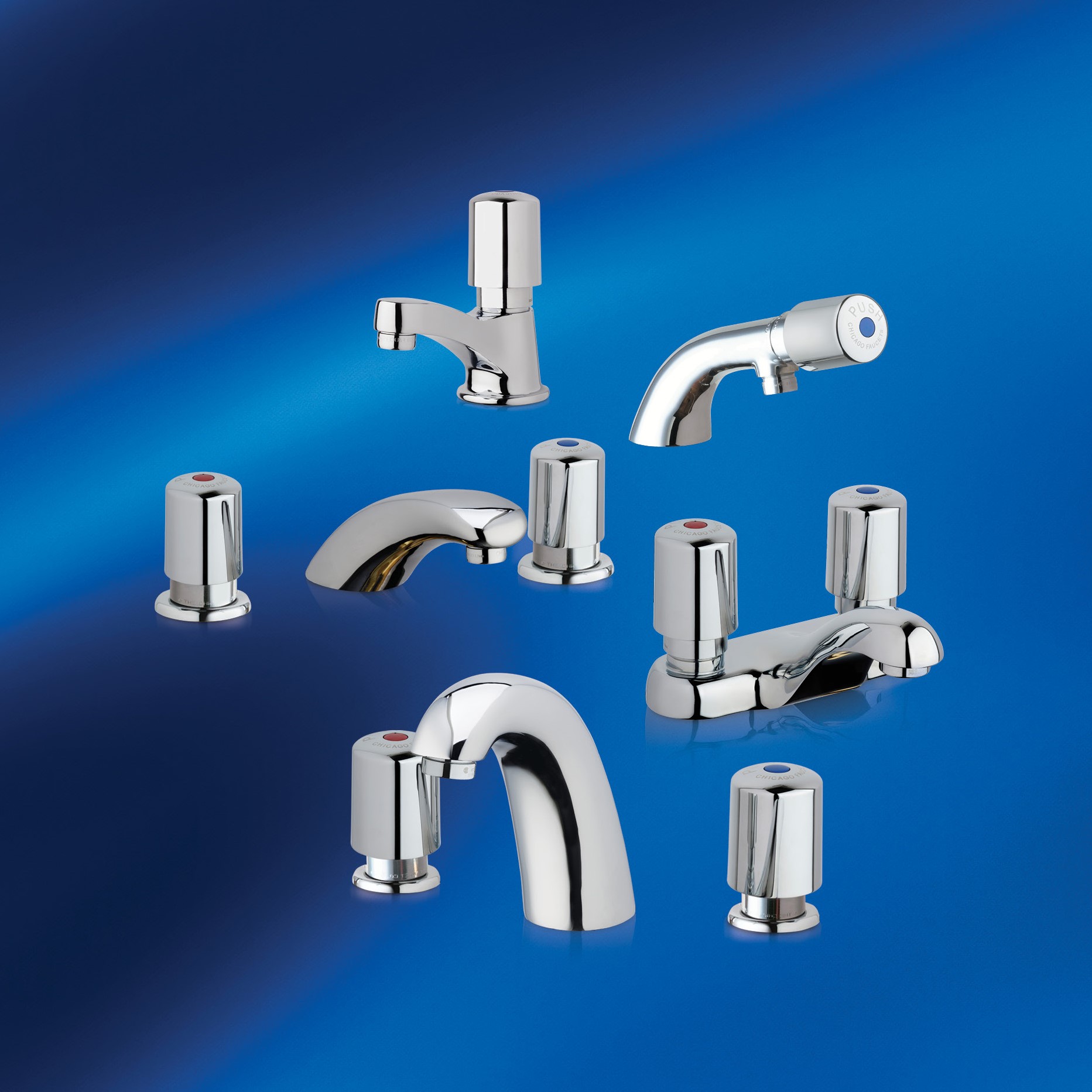
- 0.35 to 0.50 GPM for low-flow metering applications
- Around 1.0 GPM for pre-rinse spray valves
- 1.5 GPM for healthcare and handwashing applications
- 2.2 GPM for kitchen and service sink use
This range allows a single manufacturer to cover everything from water-saving restrooms to full-output industrial cleaning.
Pressure and temperature capability
Industrial systems are not always stable, which makes operating range important.
What matters
- Ability to handle pressure fluctuations
- Safe and reliable operation at elevated temperatures
Chicago Faucets performance
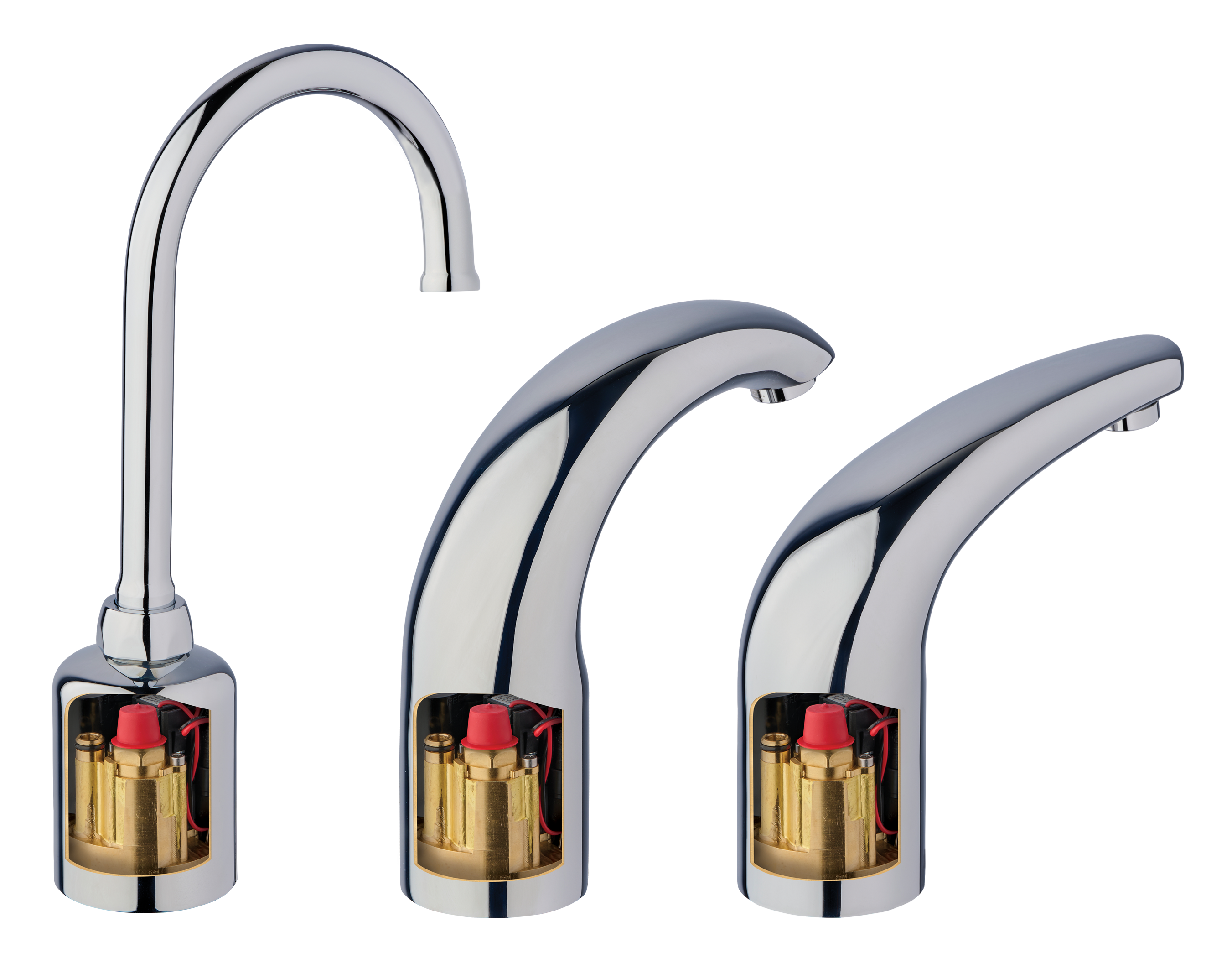
- Operating pressure from 20 to 125 PSI
- Standard temperature range from 40°F to 140°F
- Hot inlet capability up to 180°F in mixing applications
These ranges support use in commercial kitchens, healthcare environments, and industrial washdown areas without compromising performance.
Cartridge and valve reliability
This is where Chicago Faucets separates itself from most brands.
 What matters
- Leak prevention
- Long service life
- Ease of maintenance
Chicago Faucets advantage
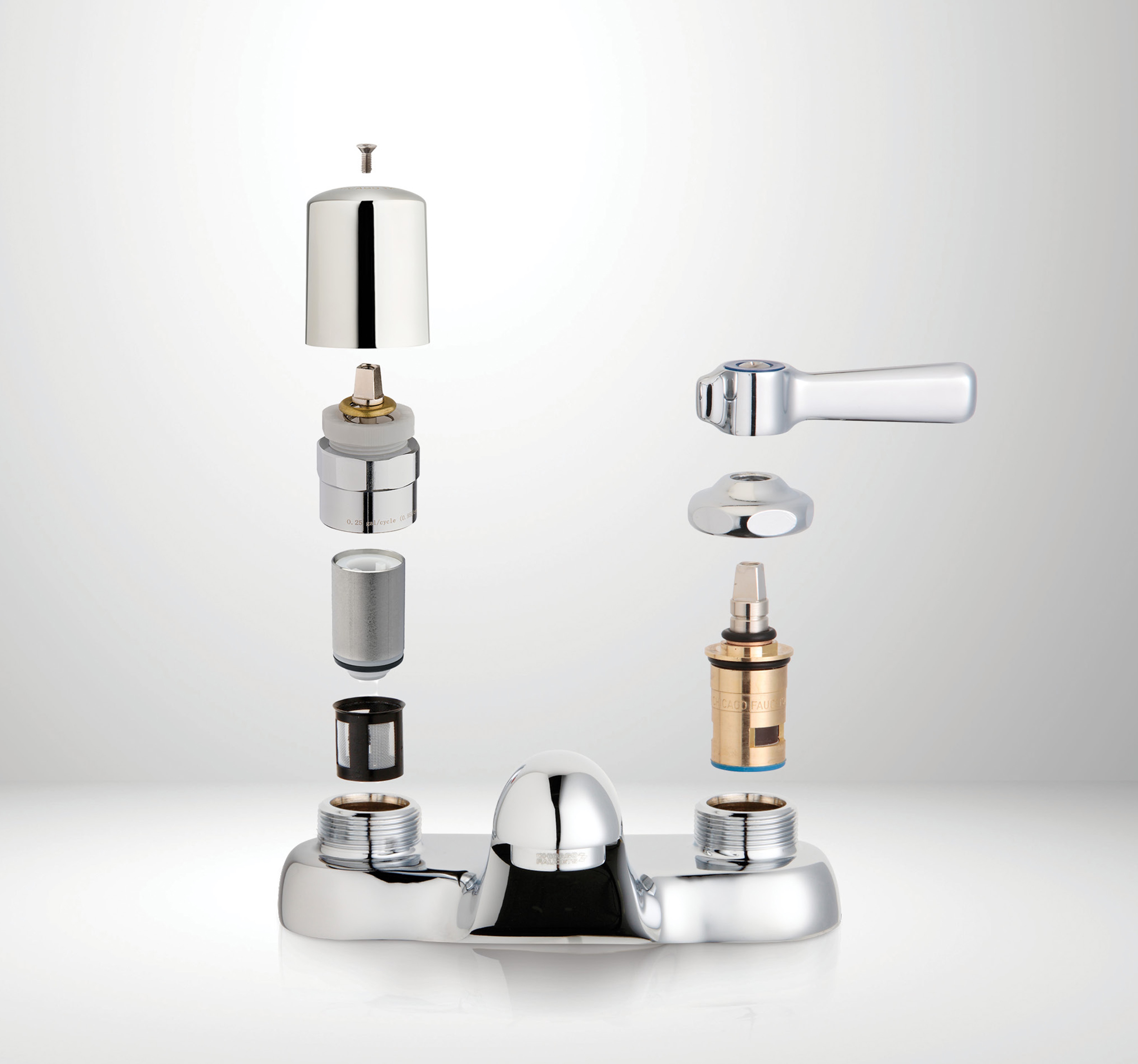
In 1913, Chicago Faucets introduced the first self-contained, replaceable cartridge, the Quaturn design. That innovation is still influencing faucet technology today.
Their cartridge systems are designed to:
- Operate with a quarter turn
- Close with water flow, reducing wear and tear
- Minimize dripping and seal failure
- Be replaced without removing the entire fitting
The result is less downtime, fewer service calls, and a longer usable life.
Pre-rinse and industrial configurations
Flexibility is essential in industrial and food service environments.
What matters
- Reach and maneuverability
- Cleaning efficiency
- Resistance to heavy use
Chicago Faucets options
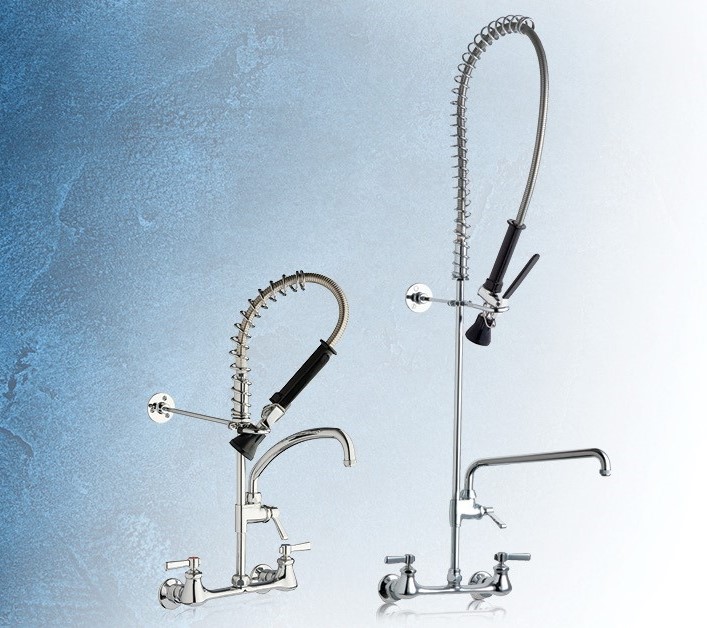
- Pre-rinse fittings with flexible stainless steel hoses up to 44 inches
- Spray valves designed for efficient cleaning
- Adjustable wall-mounted systems
- Vandal-resistant handles for public or high-use areas
These configurations are built for real-world use in kitchens, janitorial stations, and industrial workspaces.
Compliance and safety
Meeting code is not optional in commercial and industrial projects.
What matters
- Water safety standards
- Temperature control and scald protection
- Accessibility requirements
Chicago Faucets certifications
Chicago Faucets products are tested to meet:
- ASME A112.18.1 and CSA B125.1 performance standards
- NSF/ANSI 61 for drinking water safety
- NSF/ANSI 372 for low lead compliance
- ASSE 1070 for thermostatic and scald protection
- ADA requirements for accessibility
This makes them suitable for healthcare, education, public facilities, and regulated environments.
Serviceability and long-term cost
The true cost of a faucet is not the purchase price, it is what happens over time.
What matters
- Speed of maintenance
- Availability of parts
- Lifecycle cost
Chicago Faucets approach
Chicago Faucets designs its products around modularity. Components such as cartridges, handles, and spouts are interchangeable and serviceable.
That means:
- Repairs can be completed without removing the fitting
- Maintenance teams can work faster
- Facilities do not need to replace entire units
Over time, this reduces downtime and significantly lowers operating costs.
Connected capabilities for modern facilities
Today’s facilities are looking for more than durability. They need insight and control.
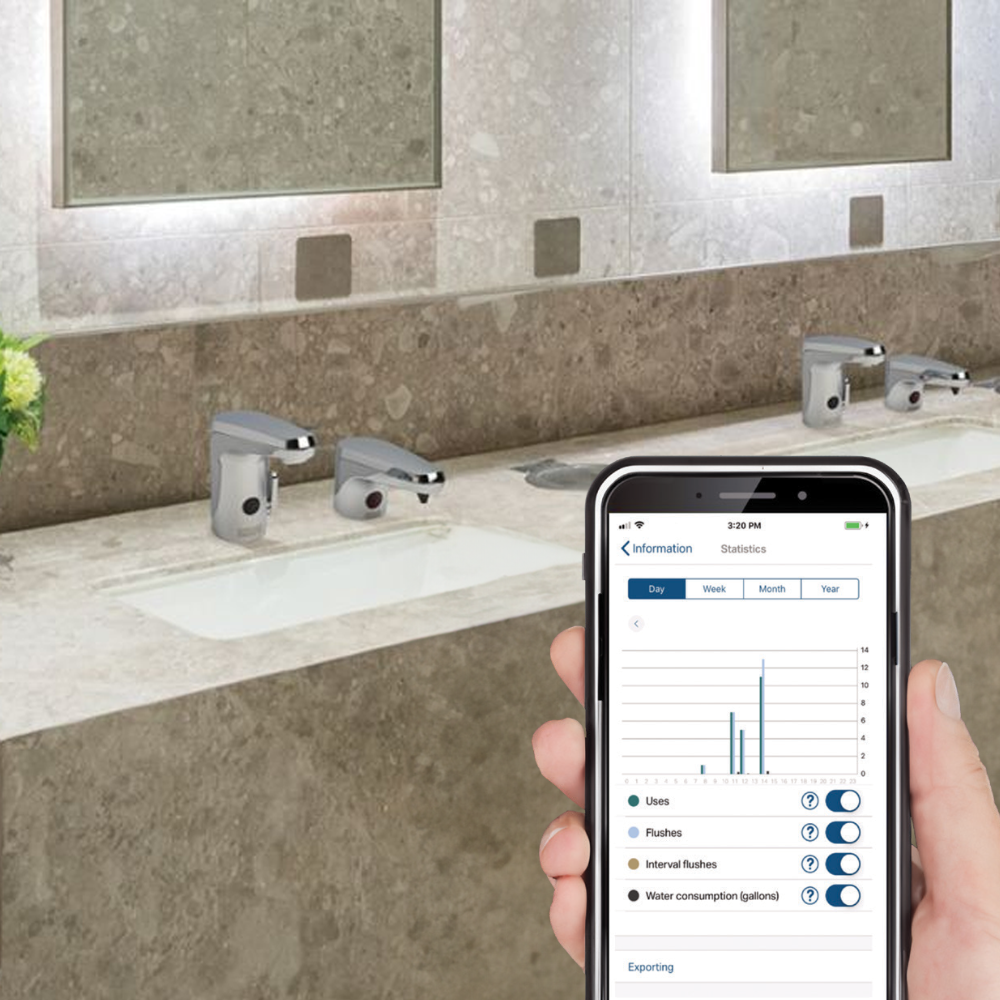
Chicago Faucets offers connected solutions that allow facility managers to:
- Monitor water usage
- Adjust performance settings
- Improve hygiene cycles
- Manage multiple units across a building
These capabilities support better water management and more efficient operations without adding complexity.
Click here to learn more about the CF Control app.
Where these fittings are used
Chicago Faucets products are trusted across demanding environments, including:
- Hospitals and healthcare facilities
- Commercial kitchens and food service
- Schools and universities
- Airports and transportation hubs
- Industrial and manufacturing plants
- Public and commercial buildings
These are environments where reliability is essential and failure is not an option.
Why Chicago Faucets stands out
When you break it down by actual specifications and long-term performance, Chicago Faucets delivers a combination that is difficult to match:
- Cast brass construction designed for heavy use
- Flow rates that cover both conservation and high-demand applications
- Wide operating pressure and temperature ranges
- Proven cartridge technology with over 100 years of history
- Full compliance with major plumbing and safety standards
- Modular design that simplifies maintenance
- Connected capabilities for modern facility management
Bottom line
If you are evaluating heavy-duty commercial faucets for industrial use, the decision should be based on performance, serviceability, and compliance. Chicago Faucets checks every one of those boxes and has the track record to back it up. It is not just another option on the market; it is the standard many specifications are built around.
Questions About Heavy-Duty Commercial Faucets
What is the best heavy-duty commercial faucet for industrial use?
The best heavy-duty commercial faucet is one that combines durable construction, consistent performance, and full code compliance. Chicago Faucets stands out because of its cast brass build, proven cartridge design, and ability to operate across a wide range of flow rates and pressures. It is widely trusted in healthcare, food service, and industrial environments where reliability is critical.
What flow rate should a commercial or industrial faucet have?
It depends on the application. Handwashing and healthcare settings typically use around 1.5 GPM, while service sinks and kitchens often require up to 2.2 GPM for adequate cleaning power. At the same time, many facilities now require low-flow options as low as 0.35 to 0.50 GPM for water conservation. Chicago Faucets offers solutions across this full range, so you can match performance to the job.
Are brass or stainless steel faucets better for industrial use?
Both materials are used, but they serve different purposes. Stainless steel is often chosen for corrosion resistance, typically in 16 or 18 gauge construction. Chicago Faucets uses solid cast brass bodies, which provide greater thickness and structural strength than sheet metal. In high-use environments, brass construction tends to deliver longer service life and better resistance to wear.
What certifications should a commercial faucet meet?
A commercial or industrial faucet should meet key standards for safety and performance, including:
- NSF/ANSI 61 for drinking water safety
- NSF/ANSI 372 for low lead compliance
- ASME A112.18.1 and CSA B125.1 for performance
- ASSE 1070 for scald protection in regulated environments
- ADA requirements for accessibility
Chicago Faucets products are built and tested to meet these standards, making them suitable for regulated applications like healthcare and public facilities.
Why is the cartridge important in a commercial faucet?
The cartridge controls how the faucet operates and wears over time. A poorly designed cartridge can lead to leaks, sticking handles, and frequent maintenance. Chicago Faucets introduced one of the first replaceable cartridge designs, allowing facilities to service the faucet without replacing the entire unit. This reduces downtime and makes long-term maintenance far more manageable.
How long should a heavy-duty commercial faucet last?
In a high-traffic environment, a well-built faucet should last many years with proper maintenance. The key factors are material strength, cartridge quality, and serviceability. Chicago Faucets fittings are designed with replaceable components and durable construction, which allows them to stay in service significantly longer than disposable or non-serviceable alternatives.
What features are important for commercial kitchen or industrial cleaning use?
For kitchens and industrial settings, flexibility and reach are just as important as durability. Look for:
- Pre-rinse spray valves
- Flexible stainless steel hoses
- Swivel spouts
- High-pressure capability
Chicago Faucets offers pre-rinse and service fittings specifically designed for these environments, making daily cleaning faster and more efficient.
Are there connected options for commercial faucets today?
Yes. Many facilities are moving toward connected solutions to better manage water usage and hygiene. Chicago Faucets offers connected systems that allow facility managers to monitor performance, adjust settings, and manage multiple units across a building. This helps improve efficiency without adding unnecessary complexity.
Why do contractors and engineers specify Chicago Faucets?
Chicago Faucets is often specified because it consistently meets the technical requirements that matter most. Its products combine durable materials, proven cartridge performance, wide operating ranges, and full compliance with major standards. For many professionals, it is a reliable choice that reduces risk on large projects.