

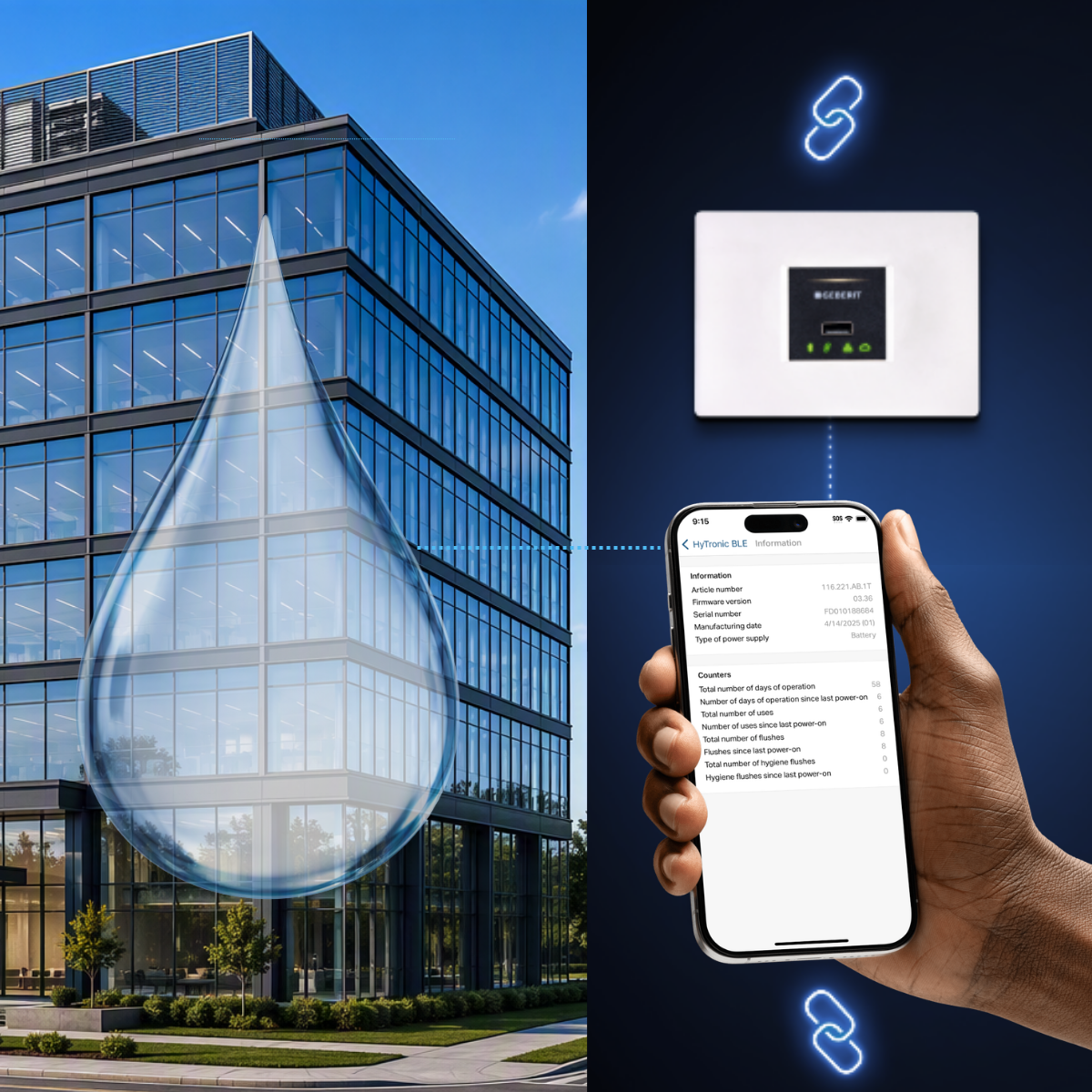
Building automation has changed how facilities manage critical systems. A hospital may have hundreds of faucets, a campus may have fittings spread across residence halls, classrooms and athletic buildings and an airport or stadium may experience dramatic shifts in occupancy from one day to the next.
In each case, the plumbing system is distributed. Conditions can vary by building, floor, department or fitting. That is where connected water management can add value.
The point-of-use gap
Centralized water data can help teams understand system-wide consumption and equipment conditions. But it may not answer faucet-level questions:
What is the temperature at or near a particular faucet?
Is a connected faucet online and communicating?
Has a scheduled hygiene flush occurred?
Is there a location that needs closer review?
This is not an argument against centralized monitoring. It is an argument for a more complete picture. Point-of-use information can supplement the data facilities already collect, adding context closer to where water is delivered and used. For large or complex properties, that can help teams focus attention where it is needed instead of relying only on periodic manual checks.
Why BACnet matters
BACnet, or Building Automation and Control Networks, is a communication protocol created for building automation and control systems. In simple terms, it gives compatible building devices and systems a common way to exchange data. For water management, BACnet creates an opportunity to bring relevant plumbing data into the same building automation system used for other critical functions.
That matters because water data is most useful when it fits into established facility workflows. Controls professionals should not have to manage a separate platform for every connected system in a building. A common BAS environment can make information from compatible plumbing devices more accessible to the teams responsible for operating and maintaining the facility.
The goal is not to make every faucet a stand-alone technology platform. It is to extend connected-building visibility farther into the plumbing system.
Moving closer to the fitting
Connected plumbing can provide information from locations that centralized systems may not fully capture. A central domestic-water system at a hospital may be operating within expected parameters, but facility staff may still need information from a particular patient-care area or faucet group. Point-of-use temperature information, flushing records and device status can provide useful context when teams are evaluating conditions at those locations.
The same principle applies in commercial facilities, higher education, transportation hubs and public venues. Wherever plumbing systems are widely distributed, fitting-level data can complement the system-level information already available. The value is not data for its own sake. It is giving facility and controls teams information they can use in the course of managing a complex building.
Bringing plumbing data into the BAS
CF Connect PLUS was developed to bring compatible Chicago Faucets electronic faucets and point-of-use temperature-sensing angle stop adapters into the building automation environment.
Using native BACnet/IP connectivity, the system communicates through the CF Connect PLUS Gateway to the BAS. Temperature is measured at the faucet angle stop and can be made available as BACnet objects. The system can also support automated hygiene flushing, system-status monitoring, alerts and digital records of flushing activity.
The important distinction is where the information originates: at the point of use. That allows connected plumbing to become part of the same operational conversation as HVAC, lighting, security, and other building systems.
A broader view of water management
Connected water management does not replace a water-management program, routine maintenance, manual observation or the experience of facility professionals. It can add another layer of operational information across a building’s plumbing infrastructure.
For facility teams, that may mean stronger documentation and more visibility across distributed fittings.
For engineers and specifiers, it creates an opportunity to consider plumbing connectivity during design, alongside other connected-building systems.
For controls professionals, it offers another category of BAS data that can be incorporated into existing workflows.
Chicago Faucets recently joined BACnet International as a Silver Member, reflecting our investment in connected plumbing and the growing role of water data in building operations. As buildings become more connected, water management needs to be part of the conversation. BACnet provides a foundation for bringing information together, and point-of-use connectivity can help facilities see more of what is happening throughout their plumbing systems.
Download the free eBook to explore how BACnet connected plumbing can bring temperature data, faucet status and hygiene-flushing documentation into the building automation environment.