

Across airports, stadiums, casinos, retail centers, restaurants, universities, and transportation hubs, maintenance teams are being asked to do more with fewer resources. Labor shortages, increasing restroom traffic, and heightened hygiene expectations have made it harder than ever to keep public restrooms running efficiently.
These are many reasons why centralized soap dispensing systems have become the preferred solution in commercial restrooms.
But now the industry is evolving again and the next advancement in restroom soap dispensing is no longer simply about moving away from individual soap cartridges. The conversation is increasingly shifting toward higher-capacity centralized soap reservoirs that can reduce refill labor, improve restroom uptime, and help maintenance crews service large public restroom environments more efficiently.
For facility managers, the challenge is not simply maintaining a clean restroom, it's ensuring soap
is always available while minimizing the time custodial staff spend on repetitive refill tasks.
The question becomes:
How can facilities reduce maintenance workload without compromising user experience?
The Problem: More Fixtures Mean More Maintenance
Modern commercial restrooms are increasing designed with long vanity configurations featuring 8, 10, or even 12 sinks to accommodate large volumes of visitors.
While these layouts improve traffic flow and reduce wait times, they can create a maintenance burden behind the scenes.
Every soap dispenser represents another potential refill point. In busy environments, custodial staff may need to check and refill dispensers multiple times per day, especially during peak travel, event, or occupancy periods.
The result is:
More labor hours spent refilling soap
Increased restroom maintenance visits
Greater risk of dispensers running empty
Disruptions to cleaning schedules
Less time available for higher-priority facility tasks
For organizations already struggling with staffing shortages, these inefficiencies add up quickly.
The Solution: Reduce Refill Points, Not Service Levels
Many facilities have already moved away from individual soap cartridges in favor of centralized soap dispensing systems. By feeding multiple dispensers from a share reservoir, maintenance teams can reduce the number of locations that need to be serviced.
But not all centralized systems deliver the same operational benefits.
In high-traffic environments, reservoir capacity becomes a critical factor.
A large reservoir means:
Fewer refill trips
Less time spent servicing dispensers
Improved restroom uptime
Better support during peak occupancy periods
More efficient use of maintenance labor
Instead of continuously reacting to low soap levels throughout the day, custodial teams can spend
more time focusing on preventative maintenance and other facility priorities.
Designed for High-Volume Facilities
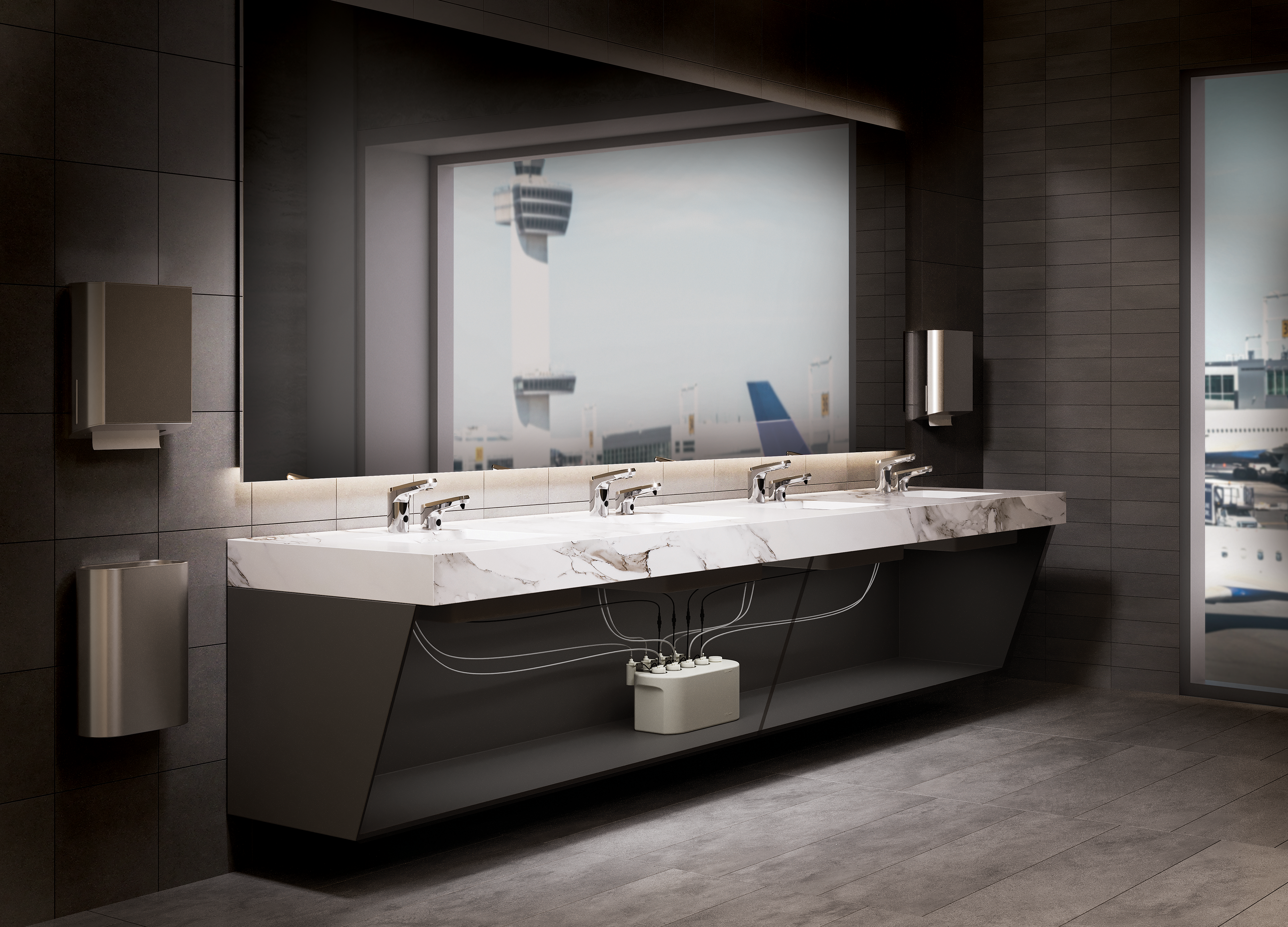
The Chicago Faucets E-Tronic® 80 SoapBank multi-feed soap dispensing system was developed specifically to address these challenges.
Its centralized reservoir holds over 3.4 gallons (13 liters) of soap and can supply up to four dispensers from a single fill location. Available in 2-, 3-, and 4-feed configurations, the system allows facilities to match soap dispensing capacity to restroom layout and traffic demands.
Consider a 12-sink airport restroom vanity.
With traditional dispensers, maintenance staff may need to monitor and refill numerous individual soap locations. By using three SoapBank systems with four feeds each, the same restroom can be serviced through just three centralized reservoirs, reducing refill frequency and simplifying maintenance workflows.
What Facility Managers Should Be Looking For
When evaluating restroom upgrades, many facility teams are asking a different question than they did just a few years ago.
Instead of focusing solely on fixture aesthetics, they are looking for solutions that help solve ongoing operational challenges.
Key considerations include:
Reducing labor requirements
Minimizing refill frequency
Improving restroom uptime
Supporting scalability for large restroom layouts
Simplifying maintenance procedures
Increasing long-term reliability
Higher-capacity centralized soap systems help address each of these goals by reducing the effort required to keep soap available where and when it's needed.
Building More Efficient Restrooms
As facilities continue facing staffing constraints and rising operational demands, restroom infrastructure is becoming an important part of overall efficiency planning.
The future of commercial restroom design is about more than touchless technology. It's about creating systems that help maintenance teams work smarter, reduce repetitive tasks, and keep restrooms operating reliably throughout the day.
For high-traffic facilities, higher-capacity centralized soap dispensing systems offer a practical way to improve restroom uptime, streamline maintenance, and support better overall facility performance.
Frequently Asked Questions
What problem does a centralized soap dispensing system solve?
Centralized soap dispensing systems reduce the number of soap refill points maintenance staff must service, helping lower labor requirements, improve efficiency, and reduce the risk of empty dispensers.
Are centralized soap dispensing systems beneficial for large public restrooms?
Yes. Airports, stadiums, casinos, universities, and other high-traffic facilities often use centralized soap dispensing systems to simplify maintenance and improve restroom uptime.
How many dispensers can the E-Tronic® 80 SoapBank system support?
The E-Tronic® 80 SoapBank multi-feed soap dispensing system is available in 2-, 3-, and 4-feed configurations and can support up to four dispensers from a single centralized reservoir.