


Equips Patient Showers with Auto-Drain® Shower System
The Challenge
MaineHealth Maine Medical Center – Portland, (MHMMC-P) is a 700-bed medical complex located in Portland’s Western Promenade neighborhood. Affiliated with Tufts University School of Medicine, MHMMC-P employs over 9,500 staff members who treat patients, train physicians, and conduct research. As one of only three Level I Trauma Centers in Northern New England, the hospital also houses the MaineHealth Barbara Bush Children’s Hospital, ranked among the top 25 children’s hospitals in the country.
Founded in 1874, MHMMC-P is the largest hospital in northern New England, with annual volumes including 28,000 inpatient visits, 500,000 outpatient visits, 88,000 emergency visits, and over 27,000 surgeries. It serves as the flagship hospital for Maine Health, a nonprofit healthcare network covering Maine and New Hampshire
“Infections with waterborne organisms such as Legionella, mycobacteria, Pseudomonas, and others cause significant morbidity and mortality, particularly in immunocompromised patients. Hospitals should have prospective water safety plans that include preventive measures, as prevention is preferable to remediation of contaminated hospital water distribution system.”
– National Institute of Health

Combating Infections within an addition to the Medical Center Campus
Continuing its expansion, MHMMC-P opened the 300,000-square-foot Malone Family Tower in mid-2024 as part of a multi-year growth plan. One of MHMMC-P’s primary concerns is preventing patient infections, particularly those caused by waterborne pathogens. Jim McDuff, Senior Master Plumber at MHMMC-P, highlighted the dangers: “A nearby hospital had an outbreak, and they had to redo their entire plumbing system.”
According to the Centers for Disease Control and Prevention (CDC), Legionella bacteria thrive in the stagnant water within humanmade systems, spreading through contaminated water droplets. To address this health threat CDC recommends that healthcare facilities develop and implement comprehensive water management programs (WMPs).
Additionally, ASHRAE Standard 188 establishes minimum requirements for legionellosis risk management which includes the development of a water management program and describes preventive measures.
A Proactive Solution to Legionella
Though MHMMC-P has not experienced a Legionella outbreak, the hospital strives to be proactive in preventing it. With the construction of the Malone Family Tower, MHMMC-P committed to further strengthening its infection control measures by installing a newly introduced Auto-Drain Shower System in their patient showers.

Previously, standard procedure required nursing assistants to disconnect shower hoses after each use, allowing water to drain manually. To mitigate this risk, MHMMC-P successfully upgraded its existing patient rooms with Chicago Faucets’ retrofit shower hand spray hose, which includes a valve that automatically drains standing water once the shower is turned off.
The new Malone Family Tower takes this protection a step further by incorporating a newly introduced Auto-Drain valve drain, diverter valve and shower hose combination in all the building’s 98 patient rooms. This advanced Auto-Drain Shower System prevents water from becoming stagnant in the pipes, valves, and within shower hoses—all potential breeding grounds for Legionella.
“With plumbing fixtures, any issues typically arise within the first few months. In almost a year of use, we’ve had no problems.”
– Jim McDuff, Senior Master Plumber at MMCP
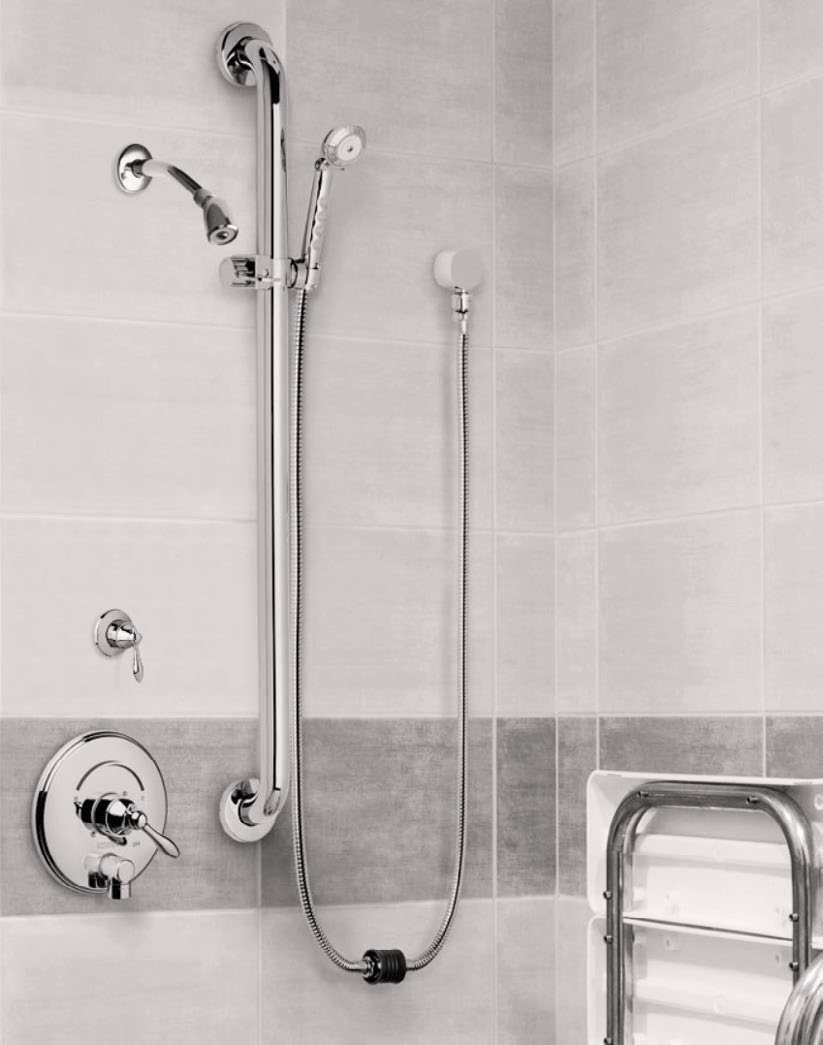
Benefits of the Auto-Drain Shower System
This concept automatically:
- Drains standing water in the column between the shower valve and showerhead within a minute after shut-off, reducing stagnant water.
- Drains the water column between the shower valve and the hand-held shower spray.
McDuff emphasized MHMMC-P’s approach to patient safety: “If you have Legionella in your system, you are at risk of growing it in stagnant water.”
When their plumbing representative mentioned this system with the self-draining valve, we spec’d it out for the new facility. The assembly was easy to install.”
The Auto-Drain Shower System also enhances patient care by reducing time-consuming manual tasks for hospital staff. “They don’t have to disconnect the shower hose, hang it, and let it dry before the next patient uses it,” says McDuff. “This system ensures a seamless, hygienic experience.”
Additional benefits of the Auto-Drain system include:
• A hand spray with pause control for assisted bathing.
• Choice of 2.5 GPM, 1.75 GPM or 1.5 GPM for efficient water use.
• ADA-compliant grab bars in various lengths, ensuring safety and accessibility.
• Full compliance with ASME A112.18.1/CSA B125.1, ASSE 1014, ASSE 1016/ASME A112.1016/CSA B125.16 standards for shower fittings and ADA ANSI/ICC A117.1 standards for accessibility
The Shower Drain System Enhances Patient Care at MHMMC-P
According to McDuff, the Auto-Drain Shower System has performed flawlessly: “With plumbing fixtures, any issues typically arise within the first few months. In almost a year of use, we’ve had no problems.”
While no regulations require hospitals to specifically install these shower drain systems or another plumbing approach, MHMMC-P prioritizes patient safety and infection prevention. “You don’t want shower water sitting in the hose or in the pipes,” McDuff added.
Though the primary aim of the shower drain system is to prevent water stagnation, its impact extends beyond this crucial function. The implementation of such innovative solutions reflects a forward-thinking approach by the MHMMC-P building
maintenance staff.
By implementing the Auto-Drain Shower System, MHMMC-P ensures that its patients can shower safely, minimizing the risk of hospital-acquired waterborne infections —fulfilling its mission of delivering the highest standard of patient care.